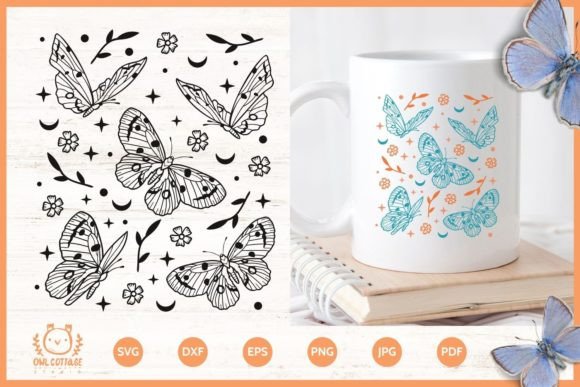
Flying Butterflies Pattern SVG: A Designer’s Real-World Review
Every embroidery designer, from the hobbyist making a gift to the professional running a shop, knows the moment. You open a new file, study the lines, and begin picturing how it will translate into stitches on fabric. Today, I’m looking at the Flying Butterflies Pattern SVG Cut File, not as a listing, but as a potential tool for my next project.
The Immediate Mood: Lightness and Movement
The first impression of this butterfly pattern is one of delicate flight. It’s not a static, rigid graphic; the arrangement suggests a gentle scattering, a sense of airy movement. As a line art design, it avoids heavy fills, which immediately tells me it’s leaning toward elegance rather than bold statement. This visual personality—soft, whimsical, and organic—creates a mood perfect for projects where you want to add charm without overwhelming the base item.
I’m thinking of a custom embroidered linen pillow cover for a wedding gift. The pattern’s layout would allow the butterflies to float across the fabric, with the open line work letting the linen texture show through, enhancing that handmade, artisan feel. It’s a design that feels inherently giftable.
Where This Embroidery File Naturally Belongs
Given its category as a T-Shirt Design, that’s an obvious starting point. On a classic tee, especially a lighter-colored one, these butterflies would create a lovely, feminine detail. But as a Graphics file, its application is broader. My mind jumps to real-life embroidery situations beyond apparel.
- Tote bags and aprons: The pattern’s scale and flow would work beautifully on a canvas tote or a kitchen apron, offering a decorative accent that doesn’t look too “crafty” but rather thoughtfully designed.
- Baby items and nursery decor: On a baby blanket or a simple sweatshirt, the butterflies are a sweet, safe theme. The lack of dense fill stitches means it’s less likely to be stiff or uncomfortable on delicate baby clothes.
- Pillow covers and tea towels: These are perfect canvases for testing the design’s stitch clarity. A pillow cover allows for a larger hoop, letting you capture all the detail, while a tea towel provides a flat, stable surface ideal for a crisp result.
- Caps and hats: Here’s where caution comes in. The curved surface of a cap requires careful placement, but a selection of a few butterflies from the pattern, rather than the full scatter, could make a charming, subtle side detail.
For small business merchandise—think Etsy listings or craft fair products—this design adds value through its aesthetic. It’s recognizably pretty and versatile, which helps with buyer engagement. A customer browsing a boutique might be drawn to an embroidered tote bag with this pattern because it feels consistent, professional, and not mass-produced.
The Practical Considerations for Stitching
Now, let’s move from “where” to “how.” How does this SVG perform when the digital file becomes physical stitches? Line art like this often translates into running stitches or slim satin stitches to outline the shapes. The success hinges on clarity.
On dark fabric, you’d need excellent thread color contrast—a bright white or a pastel—to make those fine lines pop. On textured fabrics like a slub knit sweatshirt, you must consider stabilizer carefully; a loose texture might obscure the delicate wings. For stretchy fabric, a solid stabilizer is non-negotiable to prevent distortion.
The design’s detail level appears to have graceful curves rather than sharp, tiny corners, which is a relief. Very intricate corners can be challenging for some machines or require expert digitizing. Still, I’d advise anyone to inspect the small details in their software before hooping. Are the butterfly antennae clear and separated? That’s a test point.
For commercial embroidery projects or creating patches, stitch density is key. Since the description emphasizes it’s a “cut file” and “line art,” I suspect it’s not built for heavy fill stitches. That makes it suitable for quicker stitch-outs and projects where a lighter touch is desired, but it might not be the choice for a dense, heavy-duty patch meant for a backpack.
A Real Scenario: Preparing a Boutique Tote Bag
Imagine I’m preparing a batch of embroidered tote bags for my small shop. I choose a natural cotton canvas. I select a soft grey thread for the butterflies. My first step, always, is to test the design on scrap fabric of the same weight. I check the hoop size needed to capture the full pattern’s spread. I run a stitch-out and look closely: do the lines connect smoothly? Is the spacing between butterflies pleasing on the bag’s dimensions? I might also test it in a black-and-white mockup digitally to see how it looks on both light and dark backgrounds, planning future product variations.
This process isn’t just about avoiding mistakes; it’s about building customer trust. A clean, well-executed embroidery job on a finished product speaks volumes about your brand’s quality.
Where to Use This Design Carefully
While versatile, some applications require extra thought.
- Very small hoop sizes: If you try to cram the entire sprawling pattern into a 4x4 hoop, you’ll lose detail and likely create a cluttered look. Selecting a smaller cluster from the design would be wiser.
- Layered garments like hoodies with pockets or seams might interrupt the pattern’s flow. Placement must be planned around the garment’s construction.
- Products needing frequent washing, like kitchen towels or baby clothes, benefit from this design’s likely lighter stitch count, but you should still use quality thread and secure stitches to ensure longevity.
For personalized gifts or wedding embroidery, the pattern’s elegance is a strong asset. It feels special without being overly specific, allowing you to add a monogram or date alongside it if desired.
Essential Designer Notes Before You Stitch
Before you commit this Flying Butterflies Pattern SVG Cut File to a client project or your own merchandise, make these your standard checks.
- Always, always test on scrap fabric first. It reveals how your machine handles the lines and your chosen thread behaves.
- Review the stitch density in your embroidery software. Does it look appropriate for your intended fabric weight?
- Confirm the hoop size needed fits your physical product. A large tote bag can handle a bigger hoop; a cap requires a smaller, curved one.
- Check thread color contrast against your final fabric—not just on a screen. A pale yellow thread on a cream fabric might vanish.
- Most importantly, confirm the licensing terms. The product description doesn’t specify commercial use. It is crucial to verify whether you can sell the finished embroidered items or use it in digital product previews for your shop. Never assume.
As a digital embroidery file, this pattern is a design asset. Its value isn’t just in the download; it’s in the thoughtful application. When chosen for the right project—a light, decorative touch on apparel, a boutique home good, a heartfelt gift—it elevates the handmade presentation. It moves from being a graphic on a screen to a flight of butterflies caught in thread, adding that touch of crafted beauty that makes people pause and admire.