Fishing Embroidery: A Design Review for Real Projects
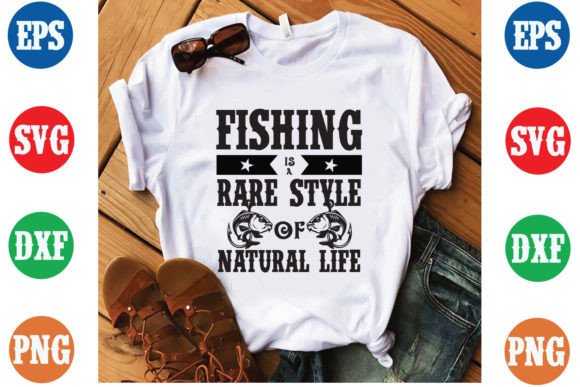
When a new embroidery file lands in my library, I don’t just look at the preview. I think about how it will live in the real world: on fabric, under a needle, and in the hands of a customer. Today, I’m considering Fishing is a Rare Style of Natural Life, a word art design categorized as a T-Shirt Design and Graphics file. My job isn’t to sell it to you, but to share a practical designer’s perspective on how it performs when you translate that digital graphic into a stitched, tangible product.
The Quiet Appeal of This Fishing Theme
My first impression of this design is one of calm, nostalgic authenticity. The phrase “Fishing is a Rare Style of Natural Life” isn’t a loud slogan; it’s a reflective statement. This creates a mood of quiet appreciation, perfect for a personalized gift or a boutique product aimed at someone who values serenity and the outdoors. The layout, being word art, is inherently graphic and relies on the shape and flow of the text to carry the visual personality. It feels like it belongs on items meant for contemplation or comfort—think a cozy sweatshirt, a well-loved tote bag, or a decorative pillow cover in a cabin or a relaxed living space.
Where This Design Shines in Embroidery Projects
Let’s walk through a real scenario. I’m preparing a custom embroidered tote bag as a gift for a father who loves fishing. I choose Fishing is a Rare Style of Natural Life because its tone is personal and respectful, not cartoonish. I envision it stitched in a classic navy or forest green thread on a natural canvas bag. The success here hinges on execution: the clarity of the lettering, the smoothness of the satin stitches or fill stitches that form the words. On a stable, medium-weight fabric like a tote, this design should perform beautifully, offering a clean, readable result that elevates the bag from generic to thoughtfully handmade.
This design has a natural home in a range of embroidery projects. For custom apparel, it would be a strong choice for a left-chest design on a polo shirt or a centered statement on a heavyweight sweatshirt. As a embroidered patch, it could be applied to a cap or a backpack, appealing to a niche audience. For home decor, consider it on a pillow cover or a kitchen towel for a rustic-themed kitchen. In a craft business context, an Etsy seller could offer it as a customization option on baby blankets for outdoor-loving families, or as a ready-made item on aprons for the home chef who also enjoys the lake. Its appeal is specific, which is a strength—it connects deeply with a certain customer.
Visual Impact and Customer Perception
When stitched well, this design affects visual appeal through its simplicity and message. It doesn’t overwhelm with detail; it communicates a clear identity. This builds customer trust and professionalism because the finished product looks intentional and well-crafted. For giftability, it scores high—it feels personal and meaningful. For a small shop product, it adds to brand consistency if your niche revolves around nature, tranquility, or masculine gifts. The handmade presentation is elevated when the embroidery is crisp, making the phrase a badge of quality rather than just a printed graphic.
Caution and Consideration: Where to Be Careful
Not every project is a perfect fit. With any word art design, the devil is in the details. Fishing is a Rare Style of Natural Life should be used carefully on items with small hoop sizes if the lettering is particularly intricate or small. Tiny lettering can become fuzzy if the stitch density is too high or the fabric texture is too rough. Avoid very stretchy fabric like thin t-shirts without excellent stabilizer, as the text could distort. On dark fabric, thread color contrast is paramount—a light thread might need a higher density to look solid. Embroidering on curved surfaces like caps requires testing to ensure the text layout doesn’t break awkwardly over the seam.
Also, consider the product’s life. For items needing frequent washing, like baby clothes or kitchen towels, ensure the stitch structure is robust and the stabilizer is properly chosen to prevent premature fraying of the lettering. The design’s stitch density in the fill areas will influence this durability. For personalized gifts or commercial embroidery on layered garments like jackets, test the design on a scrap of the actual material first to check for puckering or thread tension issues.
A Designer’s Practical Notes Before Hooping Up
My process for a design like this always involves a dry run. Here’s my checklist:
- Test on scrap fabric first. Use the same material and weight as your final project. This reveals how the embroidery file translates to actual stitches.
- Check thread color contrast. Run a black and white mockup mentally. Does the phrase stand out clearly against your chosen background color? Compare how it might look on both light and dark fabric backgrounds.
- Review the stitch density and detail level. Look at the preview carefully. Are there very dense areas or extremely small details that might blend together? Adjust your hoop size and stabilizer accordingly.
- Use proper stabilizer. This is non-negotiable for clean lettering, especially on thin fabric or textured fabrics like towels.
- Confirm the licensing. The product description mentions it’s a digital download for cutting machines. Before selling any finished product or using it in commercial embroidery, you must verify the license terms for the specific machine embroidery design file you purchase. Can you sell the physical items you make with it? Always confirm.
- Think beyond the mockup. How will this look as a small shop product in your Etsy listing photos? As a printable mockup for a digital product preview? The stitched version should match the promise of the digital asset.
The Final Stitch: A Niche Design with Strong Potential
Fishing is a Rare Style of Natural Life is a design that won’t appeal to everyone, but that’s its power. For the right project—a gift for an angler, a product line for a rustic boutique, a personalized cap for a fishing trip—it delivers a specific, resonant message. Its value as a design asset lies in its clear theme and the mood it evokes. In your embroidery project, success comes from pairing this thoughtful graphic with the right fabric, the right thread, and the right attention to detail. It’s not a design you throw onto any item; it’s one you curate for a purpose, and when you do, the finished product will feel both authentic and professionally crafted. That’s the mark of a design worth hooping up.